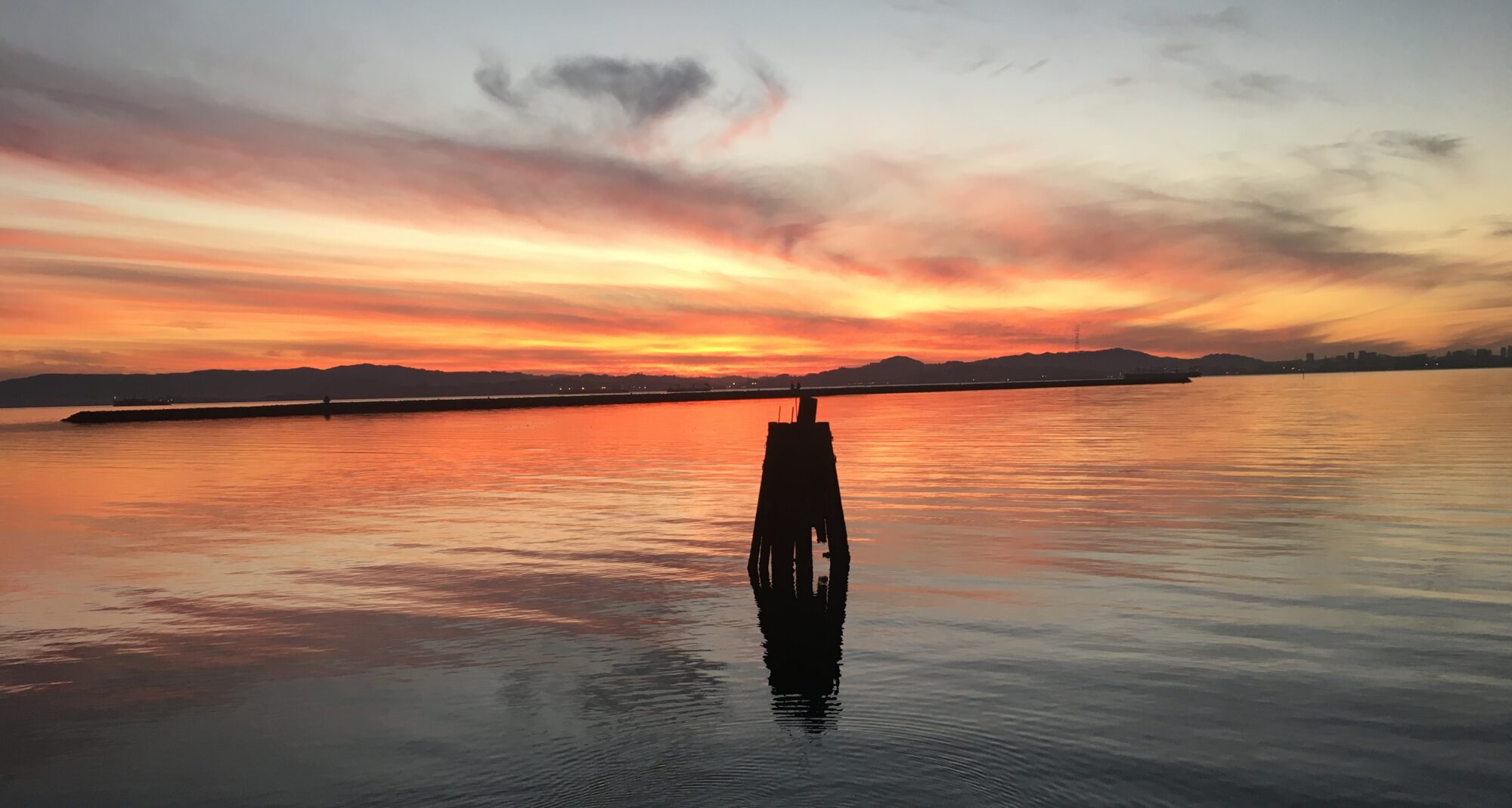

Ash Meadows National Wildlife Refuge (AMNWR) in Nevada is a geological quirk of a bygone time. The refuge is located above a large underground aquifer that scientists believe was filled with water thousands of years ago, creating a reservoir of fossil water. An underground fault acts as a dam, causing the fossil water to emerge at Ash Meadows in more than 30 seeps and springs. The result is a most unique and unusual desert environment: wetlands, streams, and springs coexisting with sandy dunes, with some dunes reaching 15.24 m (50 feet) in height.
The AMNWR encompasses 9308 hectares (~23000 acres) of wetlands and alkaline desert uplands, and is situated 145 km (~90 miles) northwest of Las Vegas, Nevada,1 on the east side of Death Valley in the Mojave Desert region. The refuge is part of Amargosa Valley in Nevada’s Nye County, located at 36.643N latitude and -116.399W longitude.2 The average rainfall is approximately 7.62 cm (3 inches) per year,3 and the average annual temperature ranges from less than 0°C (32°F) during winter nights to 46°C (~115°F) during summer days.4
The AMNWR serves as a habitat for at least 24 endemic plant and animal species not found elsewhere. This concentration of indigenous life distinguishes this refuge as having a greater concentration of endemic life than any other local area in the United States and the second greatest in all of North America.5 As these species are rare and endangered, the area was specifically set aside as a refuge in 1984 to protect the continued existence of the native animals and plants.
In years of abundant rainfall, the refuge may have a spectacular show of over 330 species of flowers and shrubs in bloom.6 Plant diversity across the desert range includes mesquite (genus Prosopis) and ash (genus Fraxinus) groves near water sources, saltbush (genus Atriplex) in the drier areas next to water sources, creosote bush (Larrea tridentata) in drier elevations in the east and southeast, and at least eight species of cactus.
Given the greater availability of water, the refuge has a diverse assortment of animal life, even desert fish! There are snails and other insects, more than 27 species of mammals (such as coyotes, black tail jackrabbits, desert cottontails, white-tailed antelope squirrel, and occasionally, desert bighorn sheep and bobcats),7 8 and five species of amphibians and 20 species of reptiles (toads, lizards, and snakes).9 In addition, over 239 bird species have been spotted, their numbers and diversity increasing during peak migratory times.

However, the AMNWR exists mainly to protect a number of primarily endemic endangered and threatened species, which are:
- Four endangered fish species, including three endemic pupfish species:
- Devil’s Hole pupfish (Cyprinodon diabolis), as two refugia populations from Devil’s Hole in Death Valley National Park. This is to ensure the species’ existence if the original Devil’s Hole population perishes.
- Ash Meadows Amargosa pupfish (Cyprinodon nevadensis mionectes), which has recovered sufficiently enough for possible removal from the Endangered Species List.
- Warm Springs pupfish (Cyprinodon nevadensis pectoralis).
- Ash Meadows speckled dace (Rhinichthys osculus nevadensis).
- One endangered and six threatened plant species (listed in descending order from endangered to threatened):
- Amargosa Niterwort (Nitrophila mohavensis).
- Ash Meadows Milk-vetch (Astragalus phoenix).
- Spring-loving Centaury (Centaurium namophilum).
- Meadows Sunray (Enceliopsis nudicaulis var. corrugata).
- Ash Meadows Ivesia (Ivesia kingii var. eremica).
- Ash Meadows Gumplant (Grindelia fraxino-pratensis).
- Ash Meadows Blazingstar (Mentzelia leucophylla).
- One beetle listed as threatened:
- Ash Meadows Naucorid (Ambrysus amargosus).
The refuge also serves as a breeding and migratory area for birds and raptors that are on or have been listed on the Endangered Species List. These include the Southwestern Willow Flycatcher (Empidonax traillii extimus; endangered), the bald eagle (Haliaeetus leucocephalus; threatened), and the American peregrine falcon (Falco peregrinus anatum; recovered).
This desert oasis is limited in terms of vertical structure and dominant (keystone) species. Unlike some other deserts with impressive mountain ranges, the AMNWR is primarily a flat area without much vertical structure. Sand dunes and mesquite stands contribute the most to the landscape’s height. Plant and soil species dominate here.
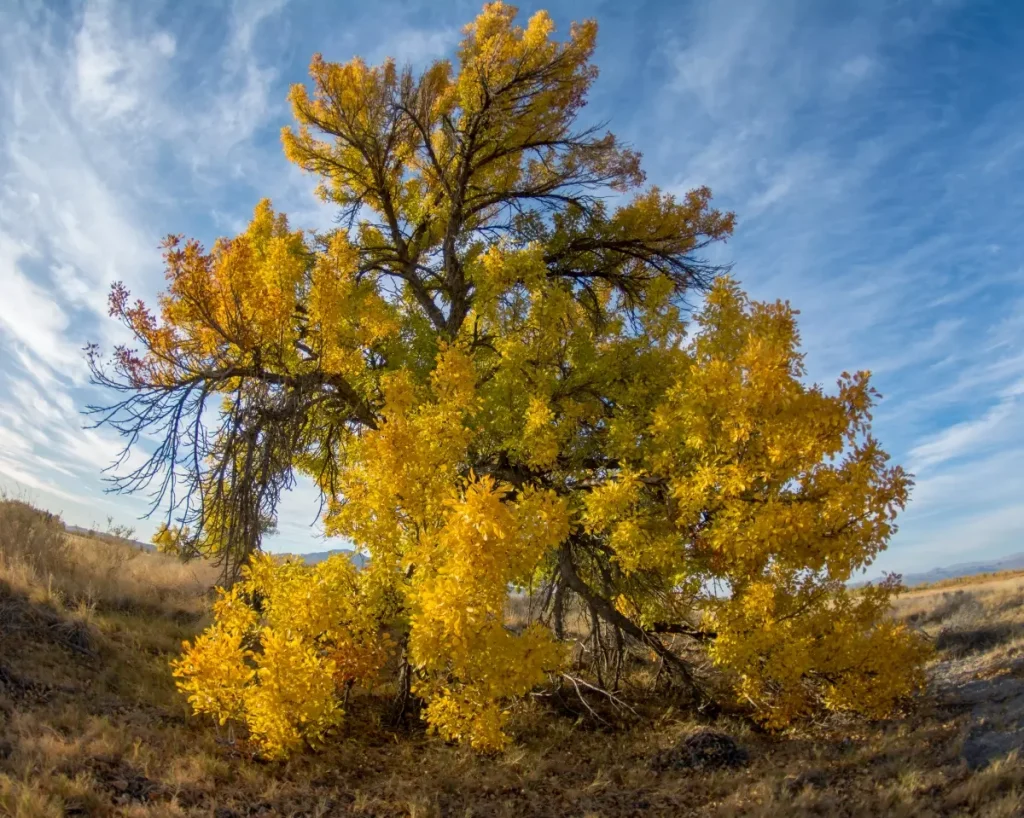
Ash Meadows was originally named after the prevalent ash trees. However, the most common tree now in the refuge is the screwbean mesquite (Prosopis pubescens),10 used as a shade source by animals and other plants. It occurs as a shrub (less than 6 m (~20 feet) in height) or as a tree (6-9 m (~20-30 feet) in height).11
Photo credit: Ash tree, U.S Fish & Wildlife Service
The keystone species for Ash Meadows is its cryptobiotic crust. Thomas and Leo Smith define the term keystone species as “a species that has a disproportionate impact on the community relative to its abundance.”12 Composed of lichens, algae and mosses, cryptobiotic crusts are a vitally important soil community in the desert. As noted in the U.S. Fish & Wildlife Services Endangered Species Bulletin, cryptobiotic crusts “…benefit native plant and animal communities by stabilizing desert soils, contributing nutrients, and increasing water infiltration.”13 But these crust communities are very fragile and easily destroyed by human activity, such as vehicle use and land development. Once disrupted, the cryptobiotic crusts can take centuries to recover.14
Most types of habitat disturbance in the desert are the result of human activities. Prior to the 1970s, much of Ash Meadows’ endemic life perished from land development (such as mining, agriculture and cattle grazing) and military use. Land development is doubly destructive, destroying native communities and introducing exotic species. Vehicle use is especially damaging, destroying the cryptobiotic crust and thus the fragile balance of the land. Off-roading into remote areas is even more disrupting as it potentially introduces invasive, non-native plant species that threaten native ecosystems. Though non-native grasses are invading all North American deserts, specifically in the Mojave Desert, the Sahara mustard plant (Brassica tournefortii) currently presents the greatest threat. Non-native grass species grow more abundantly even given the limited rainfall, producing more flammable material when dry, and increasing the potential for fires. Native plants that are less fire-adapted die in the initial fire and their seedlings compete with non-natives for limited resources. Another present-day worry is growing human populations and their increasing water demands. This drains the underground aquifer, reducing water availability to AMNWR organisms and escalating the potential devastation of desert fires.
Luckily for the AMNWR, environmental disturbances have been greatly reduced since 1984. The property’s owner (a commercial developer) abandoned their development plans and sold the land to the Nature Conservatory. The United States Fish and Wildlife Service (USFWS) subsequently bought the area for preservation as a unique desert ecosystem.15 As the AMNWR states on their website:
The refuge is currently in the habitat restoration stage and will likely remain so for years to come. The overall goal of the refuge and its Recovery Plan for threatened and endangered species is to restore the area to its natural historic condition.16
Unfortunately, desert regions not as exceptional as the AMNWR face environmental pressures. Once their cryptobiotic crust is disturbed, a predictable successional sequence begins: natives are either reduced or eliminated and the non-native plant species that require less water gain ground. As the native flora fades, so to does the native fauna suffer—over time, the entire ecosystem changes. Like the proverbial pebble that starts a landslide, small changes can eventually result in tremendous effects. At least at Ash Meadows, the landslide has been somewhat slowed, and many forms of life can enjoy this irreplaceable desert oasis.
Works Cited
Smith, Thomas M. and Robert Leo Smith. Elements of Ecology. 6th ed. San Francisco: Benjamin Cummings, 2006.
Rorabaugh, Jim and Ray Bransfield. “Lands of Contrast, Diversity and Beauty.” U.S. Fish & Wildlife Service: Endangered Species Bulletin. 27.2. (2002): 4-7
Fraiser, Jody and Cynthia Martinez. “Restoring a Desert Oasis.” U.S. Fish & Wildlife Service: Endangered Species Bulletin. 27.2. (2002): 18-19
Chen, Linus. “Desert Fish: Life on the Edge.” US. Fish & Wildlife Service: Endangered Species Bulletin. 27.2. (2002): 20-21
“Amargosa Valley Community Profile.” ePodunk. April 24, 2006. original link and Internet Archive link
“A Rare Haven in the Desert.” Digital Desert. April 24, 2006. original link and Internet Archive link
“Ash Meadows National Wildlife Refuge.” U.S. Fish & Wildlife Service. April 23, 2006. original link and Internet Archive link
“Ash Tree.” Wikipedia. April 25, 2006. link
“Atriplex.” Wikipedia. April 25, 2006. link
“Mesquite.” Wikipedia. April 25, 2006. link
“Prosopis.” Wikipedia. April 25, 2006. link
Citations
- AMNWR, “Quick Facts” page ↩
- Podunk, “Amargosa Valley Community Profile” page ↩
- Digital Desert, “Ash Meadow: Plants” page ↩
- Digital Desert, “Ash Meadows: Wildlife Calendar” page ↩
- AMNWR, “Welcome to Ash Meadows NWR” page ↩
- Digital Desert, “Ash Meadows: Plants” page ↩
- AMNWR, “Refuge Wildlife” page ↩
- Digital Desert, “Mammals” page ↩
- AMNWR, “Refuge Wildlife” page ↩
- Digital Desert, “Plants” page ↩
- Wikipedia, “Mesquite” ↩
- Elements of Ecology, pg 340 ↩
- USFWS Endangered Species Bulletin, pg 5 ↩
- USFWS Endangered Species Bulletin, pg 5 ↩
- USFWS Endangered Species Bulletin, pg 19 ↩
- AMNWR, “Refuge Habitat” page ↩